
The studies, in plain English.

What can a scan tell you about pain? What did researchers test in umbilical cord studies? Explore twelve papers in plain language, with methods, findings, limits, and links to the originals.

These summaries are for education. They are not evidence that a particular RegenMed service will help you.

Some studies can tell you more.

How a study is designed decides how much it can tell you. When the question is whether a treatment works, these are the five kinds you will see below, from the earliest step to the strongest.

  1. Lab study

    Researchers test cells in a dish or measure what a product contains.

    Can't tell you

    What happens inside a living person.

  2. Animal study

    Researchers create an injury in rats or rabbits and compare groups that get different treatments.

    Can't tell you

    Whether the same thing happens in people.

  3. Early human trial

    A small group of patients gets the treatment so researchers can check safety and get a first look at benefit.

    Can't tell you

    Whether a good result came from the treatment, from chance, or from the placebo effect.

  4. Placebo trial

    Patients are assigned by chance to the real treatment or a placebo, without knowing which. It's the fairest test of the treatment itself.

    Can't tell you

    How a different procedure or condition would turn out.

  5. Systematic review

    Researchers gather every study they can find on one question and look at the results together.

    Can't tell you

    More than the studies inside it. Weak studies make a weak review.

Placebo
A fake version of a treatment. People who get a placebo often improve too, so a fair test compares the real thing against one.
Significant vs. important
A statistically significant result is unlikely to be chance. A clinically important one is big enough for a patient to notice. Ask which one a study found.

Scans find tears that don't hurt.

If you have shoulder pain, you may have seen an MRI report that mentions a tear. These two studies didn't test a treatment. They scanned people who have no shoulder pain at all, to see what shows up.

Rotator cuff tears on MRI, by age

96 adults with no shoulder pain

Ages 19 to 39
4%1 of 25
Ages 40 to 60
28%7 of 25
Over 60
54%25 of 46
Share of each age group with a partial or full-thickness rotator cuff tear. All ages: 34% (33 of 96). Sher et al., 1995 [1]
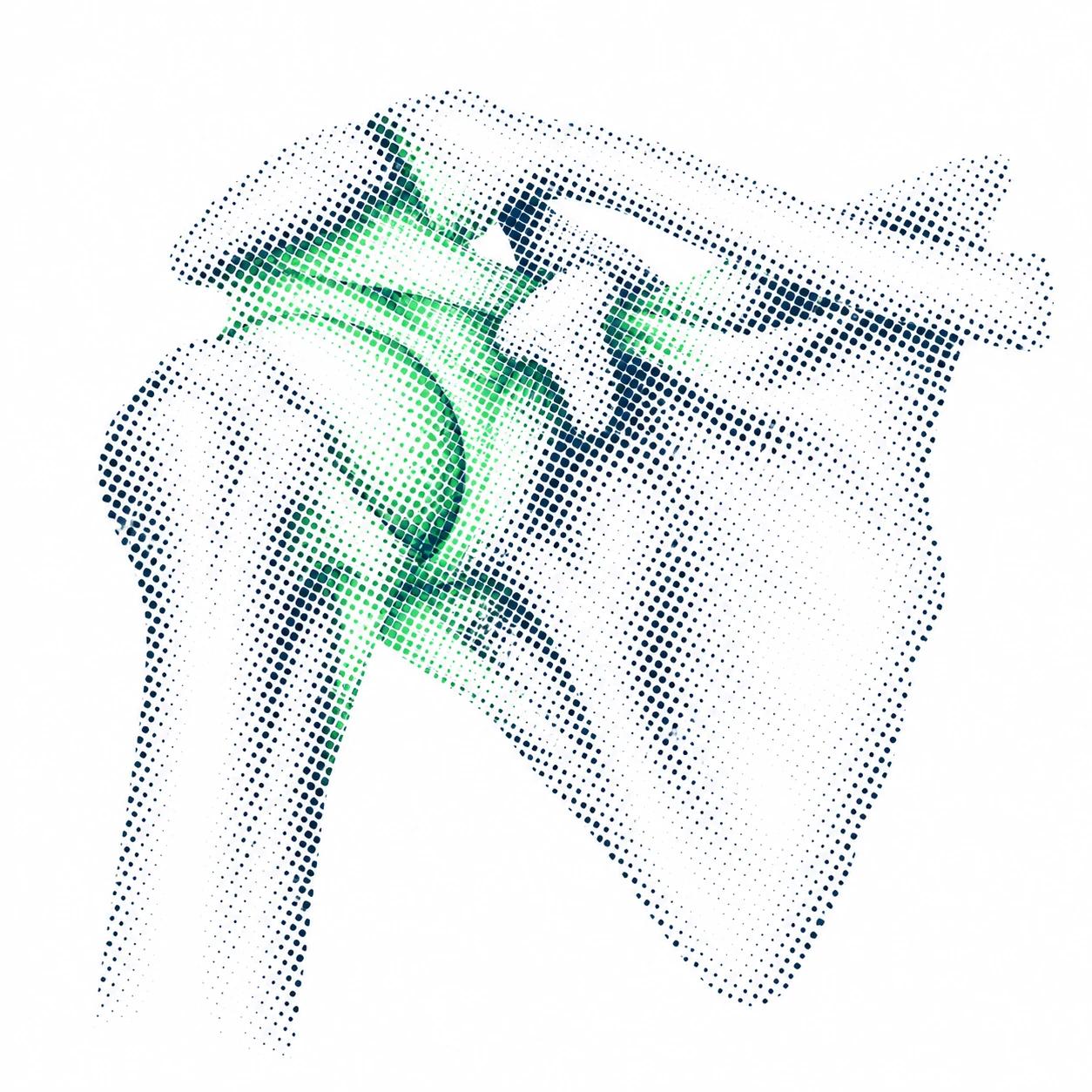
Educational halftone illustration of shoulder anatomy
Rotator cuff

Four muscles and their tendons that wrap around the ball of the shoulder joint and keep it centered as you lift your arm.

Imaging study / 96 people · Shoulder

MRI scans of shoulders that don't hurt

Sher et al., 1995, J Bone Joint Surg Am..

Read the original study (opens in a new tab)
What they did
Two radiologists read shoulder MRIs from 96 adults who had no shoulder symptoms.
What they found
A third of them (34%) had a rotator cuff tear, and tears became more common with age. The authors described these tears as compatible with normal, painless use of the shoulder, and warned against deciding on surgery from an MRI alone.
Keep in mind
It doesn't tell you whether a tear in a painful shoulder is causing the pain. That takes an exam.
Systematic review / 53 studies · Shoulder

53 studies of shoulders that don't hurt

Sanders et al., 2025, J Orthop Sports Phys Ther..

Read the original study (opens in a new tab)
What they did
Researchers collected 53 studies that scanned the shoulders of adults without symptoms, athletes included, using ultrasound or MRI.
What they found
Tendon wear, partial tears, and full tears all showed up in shoulders that didn't hurt. How often varied widely, from none of the shoulders in some studies to all of them in others.
Keep in mind
The reviewers rated the certainty of this evidence as low to very low, so read the exact numbers with caution.

What this means for you

A finding on a scan matters when it matches your symptoms and your exam. That is why an evaluation here starts with your history and a hands-on exam, and Dr. Bryan reviews your imaging himself.

Surgery, tested against placebo.

In a placebo surgery trial, some patients get the real operation. Others get a stand-in: small incisions, sometimes a camera look inside the joint, but the key surgical step is skipped. Patients don't know which group they're in, so the comparison shows what the operation itself adds.

People with the same joint problem

Assigned by chance to one of three groups

Patients don't know which surgery they had

Real surgery

The full operation, including the key surgical step.

Placebo surgery

Small incisions, sometimes a camera look inside. The key step is skipped.

Comparison group

An exercise program, or no treatment. Used in two of the three trials.

Followed for 6 months to 2 years

Pain and function compared across the groups

Patients do not know which surgery they had. The placebo group shows how much improvement comes from everything except the key surgical step. Trials [3][4][5]

Randomized placebo trial / 180 people · Knee

Knee arthroscopy for osteoarthritis

Moseley et al., 2002, N Engl J Med..

Read the original study (opens in a new tab)
What they did
180 people with knee osteoarthritis were assigned by chance to an arthroscopic clean-out of the joint, an arthroscopic wash-out, or placebo surgery with skin incisions only. Neither the patients nor the people measuring results knew who got which, and everyone was followed for two years.
What they found
At no point did either real surgery group report less pain or better function than the placebo group.
Keep in mind
The trial tested these two procedures for osteoarthritis. It doesn't cover other knee surgeries, such as ligament repair after an injury.

Randomized placebo trial / 210 people · Shoulder

Shoulder impingement surgery in Finland

Paavola et al., 2018, BMJ (FIMPACT).

Read the original study (opens in a new tab)
What they did
210 people with shoulder impingement at three Finnish hospitals were assigned by chance to decompression surgery, which removes bone spurs and soft tissue to make room for the tendons, to a placebo arthroscopy that only looked inside the joint, or to an exercise program.
What they found
After two years, pain at rest and during arm movement was about the same after real and placebo surgery. Surgery did a little better than exercise, but by less than 15 points on a 100-point pain scale, the smallest change the researchers had decided a patient would notice.
Keep in mind
The exercise group knew they hadn't had surgery, and the authors say that comparison likely favored surgery.

Randomized placebo trial / 313 people · Shoulder

The same surgery at 32 UK hospitals

Beard et al., 2018, Lancet (CSAW)..

Read the original study (opens in a new tab)
What they did
313 people with at least three months of shoulder pain and no full tendon tears had already tried exercise therapy and at least one steroid injection. They were assigned by chance to decompression surgery, placebo arthroscopy, or no treatment beyond one follow-up visit with a specialist.
What they found
At six months, the two surgery groups scored about the same on a standard shoulder pain and function scale. Both did slightly better than no treatment, but not by enough to matter to patients. The authors wrote that the results question the value of this operation and that patients should hear this when deciding on care.
Keep in mind
By six months, 23% of the decompression group and 42% of the placebo group hadn't had their assigned procedure, which weakens the comparison.

What this means for you

Surgery is sometimes the right choice. These trials show that for some common procedures, the operation added little beyond what a placebo did. Before any procedure, it is fair to ask whether it has been tested against a placebo for your condition, and what that test found.

Umbilical cord tissue, explained.

Products made from donated umbilical cords are a growing part of regenerative care. The seven studies below run from lab tests to small human trials, and they did not all study the same kind of product. That difference matters when you compare them.

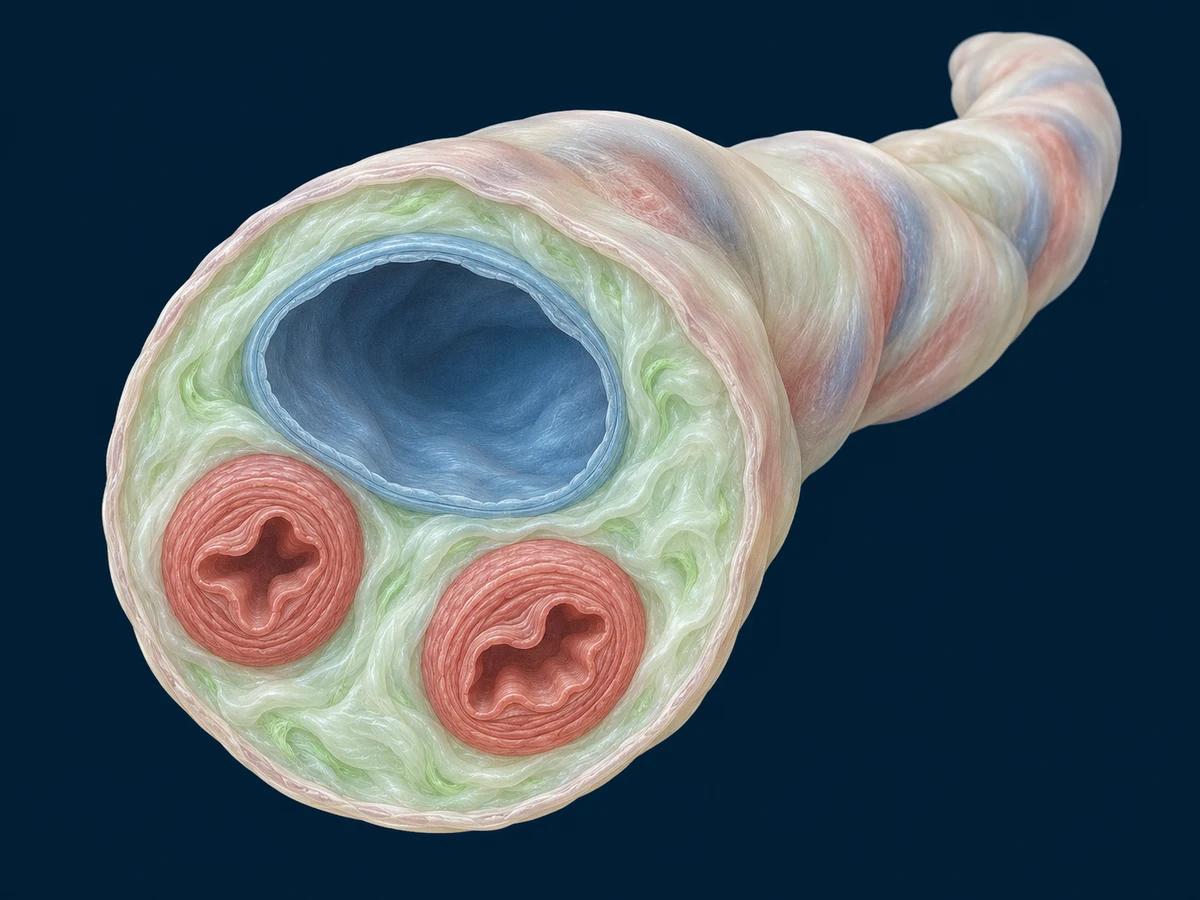
Dimensional umbilical cord cutaway with one larger vein and two smaller arteries within surrounding tissue
One umbilical vein
The larger, blue vessel.
Two umbilical arteries
The smaller, thicker-walled coral vessels.
Wharton's jelly
The pale supporting tissue around all three vessels.
Educational cord cross-section. Simplified and not to scale; not patient imaging.

Words you will see

Wharton's jelly
The soft, jelly-like tissue that cushions the blood vessels inside the umbilical cord. It's collected from cords donated after birth.
MSCs
Short for mesenchymal stromal cells, found in cord tissue, bone marrow, and fat. In the lab they can become cartilage, bone, or fat cells, and they release signals that affect inflammation and repair.
Exosomes
Tiny packets that cells release, carrying proteins and genetic messages to nearby cells.
Growth factors and cytokines
Proteins that cells use to signal each other to grow, repair, or turn inflammation up or down.
Hyaluronic acid
A slippery substance in healthy joint fluid. It's also a common knee injection, and one trial below used it as the comparison.
Cultured vs
minimally manipulated. Cultured products contain cells grown in a lab to reach millions per dose. Minimally manipulated products are processed and packaged without growing cells.

Lab study / Product testing

What's inside one Wharton's jelly product

Gupta et al., 2020, J Orthop Surg Res..

Read the original study (opens in a new tab)
What they did
Researchers tested samples from several batches of an injectable Wharton's jelly product made from cords donated after cesarean births.
What they found
Every sample passed sterility testing. The samples contained growth factors, signaling proteins linked to inflammation and wound healing, high levels of hyaluronic acid, and particles the size of exosomes.
Keep in mind
It measured what the product contains, not whether it helps patients. Two authors consult for BioIntegrate, a company several authors are affiliated with, and two own shares in it.

Lab study / Cell counts and literature review

How many live cells these products hold

Marleau et al., 2026, J Transl Med..

Read the original study (opens in a new tab)
What they did
Researchers reviewed published studies and counted the cells in minimally manipulated Wharton's jelly products.
What they found
The products held 3,369 to 111,170 cells per cubic centimeter. Between 0% and 19.1% of those cells were alive, and live MSCs were rare. The authors say a measurable effect from MSCs typically takes 10 million cells or more injected into one area, and concluded that these products are a tissue matrix with almost no cells that can't provide benefits depending on live cells.
Keep in mind
The authors note that matrix products may still support the body's natural repair. The review was funded by TAM Global and Cellular Performance Institute, and all authors work for or consult with them.

Animal study / Rabbits · 16 months

Cord cells in rabbit knee cartilage

Liu et al., 2017, Biomed Res Int..

Read the original study (opens in a new tab)
What they did
Researchers placed human Wharton's jelly MSCs on a scaffold into cartilage defects in rabbit knees and followed them for 16 months.
What they found
The cells gradually formed smooth, hyaline-like cartilage, the kind that lines healthy joints. It joined the surrounding cartilage, with new bone underneath, and the rabbits showed no immune rejection.
Keep in mind
This was a pilot study, and the authors call the results preliminary.

Animal study / Lab cells, rabbits, and rats

Cord-cell exosomes and a cartilage scaffold

Jiang et al., 2021, Bioact Mater..

Read the original study (opens in a new tab)
What they did
Researchers added exosomes from Wharton's jelly MSCs to a cartilage scaffold (cartilage with its cells removed), then tested it on cells in the lab and in knee defects in rabbits and rats.
What they found
The exosomes helped cartilage cells multiply and improved repair of the defects. They also shifted immune cells called macrophages toward a calmer, repair-oriented state and reduced inflammation inside the joint.
Keep in mind
The exosomes were purified in a lab and paired with a scaffold, so the results describe that combination.

Animal study / 48 rats

Cells, exosomes, and hyaluronic acid in rats

Meriç et al., 2025, Eur J Orthop Surg Traumatol..

Read the original study (opens in a new tab)
What they did
Researchers made cartilage defects in the knees of 48 rats and split the knees into six groups: saline, Wharton's jelly MSCs, MSC exosomes, hyaluronic acid, or MSCs or exosomes mixed with hyaluronic acid. Each knee got three weekly injections.
What they found
On a standard cartilage repair score, the MSC group scored 8.2 against 4.3 for saline, the best repair of any group. Exosomes worked about as well as the cells. Adding hyaluronic acid didn't improve repair.
Keep in mind
The rats were followed for four weeks after the last injection.

Early human trial / Groups of 8, 9, and 9 · Knee · Randomized

Lab-grown cord cells vs. hyaluronic acid

Matas et al., 2019..

Read the original study (opens in a new tab)
What they did
Adults aged 40 to 65 with knee osteoarthritis were assigned by chance to hyaluronic acid injections at the start and at six months, one injection of 20 million cultured umbilical cord MSCs, or two MSC injections six months apart. Patients, doctors, and evaluators didn't know who got which.
What they found
At 12 months, the two-injection group reported less pain than the hyaluronic acid group: 2.4 against 22.1 on a 100-point pain scale. No serious side effects were reported. MRI showed no difference in joint structure between the groups.
Keep in mind
The published abstract reports groups of 8, 9, and 9 participants, most with mild to moderate arthritis. Several authors reported employment with Cells for Cells, which made the cells.

Early human trial / 7 people · Knee · No comparison group

Seven knees, followed for seven years

Park et al., 2017..

Read the original study (opens in a new tab)
What they did
Seven people with knee osteoarthritis (grade 3 of 4) and areas where cartilage was worn down to the bone had a product made of lab-grown umbilical cord blood MSCs and hyaluronic acid gel implanted into the damaged area through a small incision.
What they found
Pain and knee function improved by 24 weeks and stayed improved through seven years. A biopsy at one year showed hyaline-like cartilage, and MRI at three years showed it was still there. There were five mild to moderate side effects and no tumors or abnormal bone growth.
Keep in mind
With seven people and no comparison group, the improvement can't be separated from placebo or chance. The cells came from cord blood, not Wharton's jelly.

What this adds up to

In rats and rabbits, cord-derived cells and exosomes supported cartilage repair. The two human trials were small, used cells grown in a lab to reach millions per dose, and reported less pain without serious safety problems. Lab counts of minimally manipulated Wharton's jelly found almost no live cells. Before any injection, ask what the product is, whether it contains live cells, and which studies used that same product.

Bring your questions.

Bring a scan, a study, or a plan someone has recommended. We can explain the evaluation process and talk through what a next step might look like.